Heirloom Bean and Sweet Corn Succotash
The three sisters, simmered in one pan
- Beans & Legumes
- Main Dish
- American (Northeast)
- one pot
- meatless
- freezes well
Shell beans and late-summer sweet corn simmer together in a buttery, thyme-scented broth. Succotash is the oldest farmhouse supper in North America, and it costs almost nothing when the garden is producing.
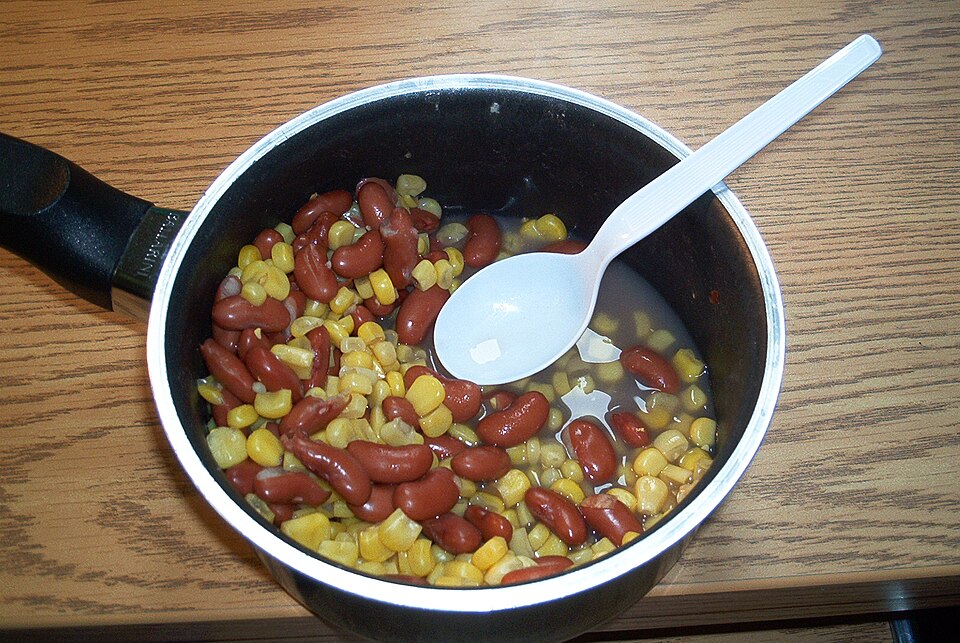
Photo: customcabf100 · Public domain · via Wikimedia Commons · all image credits
Ingredients
- 2 cups fresh shell beans (about 2 pounds / 900 g in the pod), or 1 cup dried beans soaked overnight
- 6 cups water or light vegetable stock
- 1 bay leaf
- 3 tablespoons unsalted butter or olive oil
- 1 medium yellow onion, diced
- 2 garlic cloves, sliced
- Kernels cut from 4 ears sweet corn (about 3 cups)
- 1 teaspoon kosher salt, plus more to taste
- 1/2 teaspoon freshly ground black pepper
- 1 teaspoon chopped fresh thyme
- 1/2 teaspoon smoked paprika (optional)
- 2 tablespoons chopped flat-leaf parsley
- 1 teaspoon cider vinegar
Equipment
- Large heavy saucepan or Dutch oven
- Wooden spoon
- Fine-mesh strainer
Why this recipe works
The name comes from the Narragansett word msickquatash, meaning corn simmered whole, and the dish itself is older than the United States. Its logic is agricultural: beans fix nitrogen for the corn, corn gives the beans a stalk to climb, and in the kitchen the two together form a complete protein with no meat required.
We simmer the beans first, then add the corn in the last few minutes so its sugars never turn flat. A knob of butter and a spoonful of chopped herbs at the end is the only enrichment the dish needs.
Heirloom varieties to look for
Use a dry or fresh shell bean that holds its shape: Cranberry, Kenearly Yellow Eye, October, or Jacob's Cattle. For corn, open-pollinated flint and flour corns such as Rhode Island White Cap give a deeper, more savoury sweetness than modern hybrids.
Method
Simmer the beans
Put the shell beans, water, bay leaf and 1 teaspoon of salt in the saucepan. Bring to a boil, then reduce to a gentle simmer. Cook fresh beans for 25 to 35 minutes and soaked dried beans for 45 to 60 minutes, until creamy but still intact.
Reserve the broth
Scoop out 1 cup of the cooking liquid and set it aside, then drain the beans. The starchy broth is what gives the finished dish its silky body, so do not pour it all away.
Soften the aromatics
Wipe the pan dry, melt the butter over medium heat, and cook the onion with a pinch of salt for 6 to 8 minutes until translucent. Add the garlic and thyme and stir for 30 seconds, just until fragrant.
Add corn and beans
Tip in the corn kernels and cook for 3 minutes, stirring, so they pick up a little colour. Return the beans to the pan along with the reserved cup of broth.
Simmer to marry
Simmer gently for 8 to 10 minutes, stirring occasionally, until the liquid has reduced to a glossy glaze that coats the beans. Add the smoked paprika and black pepper.
Finish bright
Off the heat, stir in the parsley and cider vinegar. Taste and correct the salt, then rest for 5 minutes before serving so the broth thickens slightly.
Cook's notes
- Salt dried beans at the start of cooking. Modern testing has settled this old argument: early salt seasons the bean all the way through without toughening the skin.
- Never boil hard once the corn goes in, and skip the acid until the end; both keep the beans tender.
- A cup of heavy cream stirred in at the end turns succotash into a chowder-like supper.
Variations
- Add 2 cups of diced summer squash or zucchini with the corn for a literal three sisters version.
- Brown 4 ounces of diced salt pork or bacon in the pan first and use the rendered fat to cook the onion.
- Stir in 1 cup of shredded sharp cheddar off the heat for a Southern-style bean bake.
Storage
Refrigerate in a covered container for up to 4 days. The dish freezes well for up to 3 months; thaw overnight and reheat gently with a splash of water. It thickens as it sits, so loosen with broth rather than butter.
How to serve it
About 1 cup per serving. Serve it within the time noted above for the best texture, because heirloom produce is far less forgiving than supermarket vegetables.