Zucchini and Feta Fritters
Crisp-edged answer to the zucchini flood
- Squash
- Appetizer
- Mediterranean
- vegetarian
- 30 minutes
- kid friendly
Grated zucchini squeezed dry, bound with egg, flour, dill and crumbled feta, then pan-fried into lacy-edged cakes. The most useful recipe we know for a glut of summer squash.
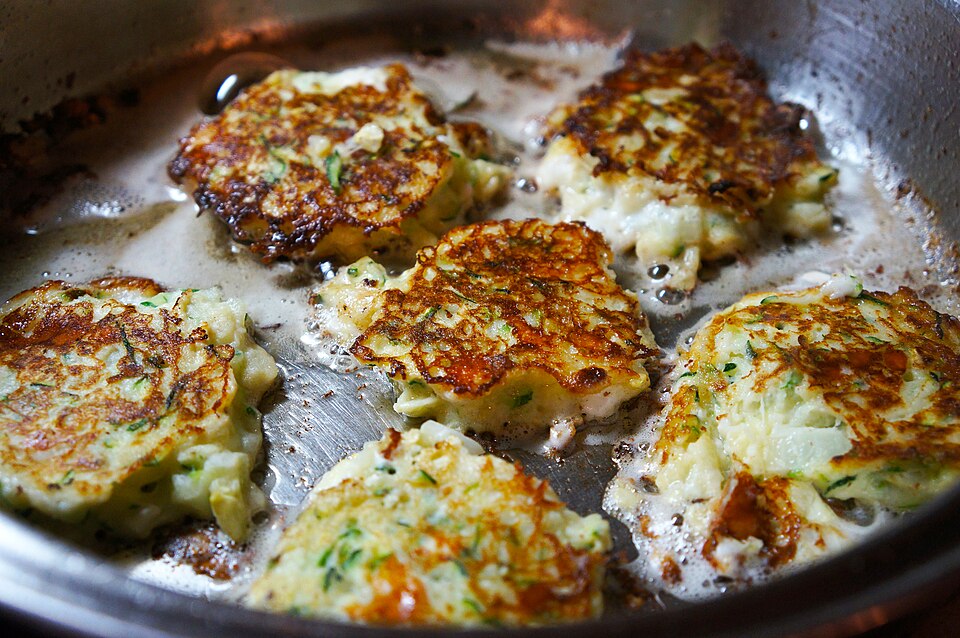
Photo: Nicole Bratt from Seattle, WA, USA · CC BY-SA 2.0 · via Wikimedia Commons · all image credits
Ingredients
- 2 pounds (900 g) heirloom zucchini, coarsely grated
- 1 teaspoon kosher salt, plus more for the batter
- 3 scallions, thinly sliced
- 1/4 cup chopped fresh dill or mint
- 2 large eggs, lightly beaten
- 3/4 cup all-purpose flour
- 1/2 cup crumbled feta
- 1 garlic clove, grated
- 1/2 teaspoon freshly ground black pepper
- 1/2 teaspoon lemon zest
- 1/3 cup olive oil, for frying
- Plain yogurt and lemon wedges, to serve
Equipment
- Box grater
- Clean kitchen towel or nut milk bag
- Large mixing bowl
- 12-inch skillet
- Slotted spatula
Why this recipe works
Zucchini fritters fail for one reason: water. A squash that looks dry can hold half a cup of liquid, and any of it left in the mix will steam the fritters and dissolve the crust. Salting and wringing the grated squash is the whole technique, and once you have that habit the recipe is nearly foolproof.
Served with yogurt and herbs, they make a light supper. Made small, they make excellent party food, because they hold their crispness far longer than most fried vegetable cakes.
Heirloom varieties to look for
Costata Romanesco, Cocozelle and Tromboncino are the best fritter squashes: thin-skinned, low in water and full of flavour. Pick them at 6 to 8 inches; oversized marrow has a spongy centre and too much moisture.
Method
Salt the squash
Toss the grated zucchini with the kosher salt in a colander and leave it for 15 minutes. The salt draws out water and seasons the squash at the same time.
Wring it dry
Pile the zucchini into the towel, gather the corners, and squeeze hard over the sink until no more liquid drips out. You should end up with roughly 4 cups of dry shreds; work in two batches if the towel is small.
Mix the batter
In the large bowl, combine the drained zucchini, scallions, herbs, eggs, flour, feta, garlic, pepper and lemon zest. Stir just until no dry flour remains. The batter should hold together when pressed but not be stiff.
Test one fritter
Heat 3 tablespoons of the olive oil in the skillet over medium-high heat. Drop in a tablespoon of batter and fry for 2 minutes per side. If it spreads too much, stir another 2 tablespoons of flour into the bowl; if it is dry, add a splash of milk.
Fry in batches
Working in batches of five, drop heaped tablespoons of batter into the hot oil and flatten each gently with the back of the spoon. Fry 3 minutes per side until deep golden and crisp.
Drain and season
Lift the fritters to a rack or paper towel, sprinkle with a little flaky salt, and keep them warm in a 200 F oven while you fry the rest. Add more oil between batches as needed.
Serve
Serve hot with plain yogurt swirled with lemon zest and a pinch of salt, and lemon wedges on the side. Chopped herbs and a drizzle of olive oil over the yogurt is a nice finish.
Cook's notes
- Squeeze the squash twice: once in the towel, then again after it sits for five minutes in a bowl.
- Keep the oil between 340 F and 360 F. Too cool and the fritters drink oil; too hot and the outside darkens before the egg sets.
- Do not overmix. Overworked batter turns gluey and the fritters lose their lacy edges.
Variations
- Add 1/4 cup grated Parmesan and 1/2 teaspoon smoked paprika in place of the dill and lemon zest.
- Swap the feta for goat cheese and the dill for basil for a milder, creamier fritter.
- Make them vegan by replacing the eggs with 2 tablespoons ground flax stirred into 6 tablespoons water and using a firm plant-based cheese.
Storage
Refrigerate cooked fritters in a single layer for up to 3 days and reheat in a 375 F oven for 8 minutes. Uncooked batter keeps for 2 days; stir well and drain off any liquid before frying.
How to serve it
4 fritters per person. Serve it within the time noted above for the best texture, because heirloom produce is far less forgiving than supermarket vegetables.