Hunan-Style Smashed Eggplant
Grilled whole, then dressed in garlic and chile
- Eggplant
- Side Dish
- Chinese (Hunan)
- vegan
- gluten free option
- grill
Whole eggplants grilled until the skin blisters and the interior collapses, then opened up and dressed with garlic, chile, black vinegar and sesame. The easiest way to cook eggplant and the most flavourful.
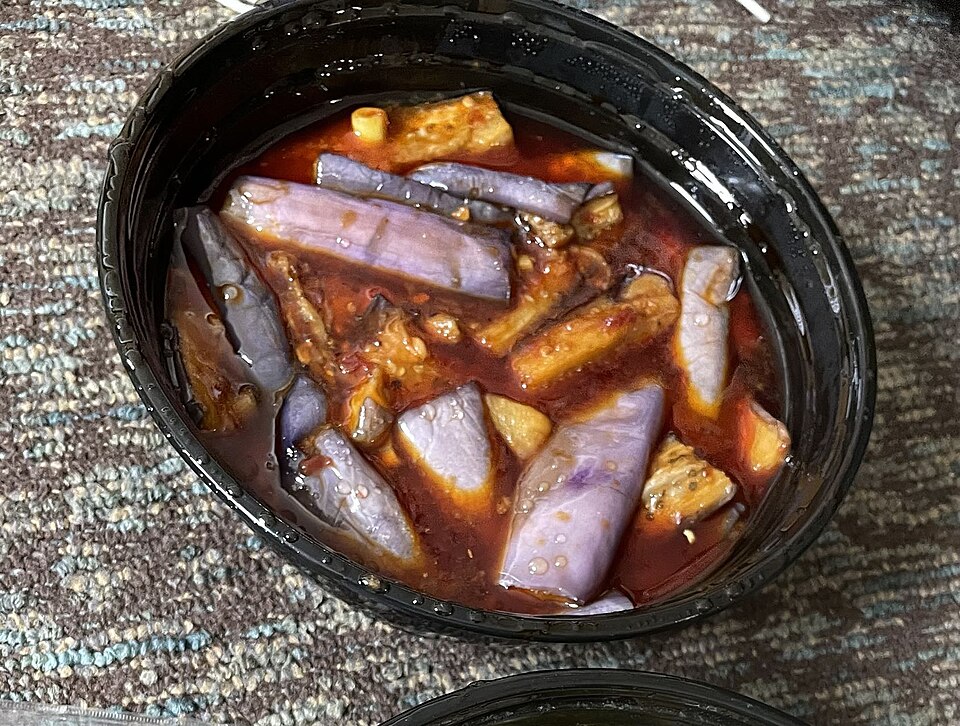
Photo: Coolli22 · CC BY-SA 4.0 · via Wikimedia Commons · all image credits
Ingredients
- 4 long eggplant (about 2 pounds / 900 g total)
- 1 tablespoon neutral oil, for grilling
- 3 tablespoons soy sauce or tamari
- 2 tablespoons Chinkiang black vinegar (or balsamic vinegar)
- 1 teaspoon sugar
- 1/2 teaspoon toasted sesame oil
- 1 tablespoon chili crisp or chili oil, plus more to serve
- 4 garlic cloves, grated
- 1 tablespoon grated fresh ginger
- 2 scallions, thinly sliced on the bias
- 1 tablespoon toasted sesame seeds
- 1/4 cup chopped cilantro
- Steamed rice, to serve
Equipment
- Grill, gas burner, or sheet pan
- Tongs
- Small bowl
- Small skillet for the aromatics
Why this recipe works
Chinese restaurants often make this dish over charcoal, which is why the smoked flavour is so hard to reproduce at home. The method is simple: cook the eggplant whole and undisturbed until the skin blackens and the flesh turns to custard, then dress it at the table.
Do not worry when the skin goes completely black. That is the goal, and the burnt exterior is what steams and sweetens the interior. A grill, a gas burner, or a very hot oven all work; the grill gives the best flavour.
Heirloom varieties to look for
Long, slender Asian varieties are best: Ping Tung Long, Millionaire, and the long Chinese or Japanese types. Their skins are thin, they hold almost no seeds, and they collapse evenly. Small Italian varieties such as Listada also work well.
Method
Prepare the eggplant
Pierce each eggplant two or three times with a fork so steam can escape, and rub the skins lightly with the neutral oil. Leave the stems on; they make handy handles with the tongs.
Grill whole
Set the eggplant over a medium-hot grill or directly over the flame of a gas burner. Cook for 20 to 30 minutes, turning every 5 minutes, until the skin is fully blackened and blistered and the flesh feels soft and slack when pressed.
Steam and cool
Move the eggplant to a plate and cover tightly with a large bowl or foil. Let them steam for 10 minutes; this loosens the skins and lets the flesh relax. They should be cool enough to handle.
Make the dressing
In the small bowl, whisk the soy sauce, black vinegar, sugar, sesame oil and chili crisp until the sugar dissolves. Warm the garlic and ginger briefly in a small dry skillet over low heat for 30 seconds, just to take the raw edge off, then stir into the dressing.
Peel and open
Working over a serving platter, peel the blackened skin away and discard it, leaving the stems intact. Open each eggplant lengthwise with a spoon, spreading the flesh out flat so it can absorb the dressing.
Dress and serve
Spoon the dressing generously over the warm flesh, then scatter with scallions, sesame seeds and cilantro. Serve with steamed rice, and pass extra chili crisp at the table.
Cook's notes
- Salt the eggplant after dressing rather than before; the soy sauce already brings plenty, and salting raw eggplant is unnecessary here.
- Cook the eggplant further than feels right. Underdone eggplant is spongy and will not absorb the dressing.
- For an oven version, roast on a sheet pan at 450 F for 40 minutes, turning twice, until fully collapsed.
Variations
- Dress with a tahini, lemon and garlic sauce instead for a Levantine twist.
- Add 2 tablespoons of crushed toasted peanuts and a squeeze of lime to the finished dish.
- Skip the chili and double the sesame for a milder, nuttier version that suits children.
Storage
The dressed eggplant is best eaten within an hour, though it can be refrigerated for up to 3 days and served cold. Undressed grilled eggplant keeps for 4 days and is excellent stirred into noodles or a salad.
How to serve it
Half an eggplant per person. Serve it within the time noted above for the best texture, because heirloom produce is far less forgiving than supermarket vegetables.