Roasted Beets with Mint Yogurt
Bake them in foil with their own leaves
- Root Vegetables
- Side Dish
- Mediterranean
- vegetarian
- gluten free
- make ahead
Whole beets roasted in a foil parcel until they collapse, then sliced over cool mint-flecked yogurt with pistachios and orange. Sweet, earthy and completely unlike boiled beets.
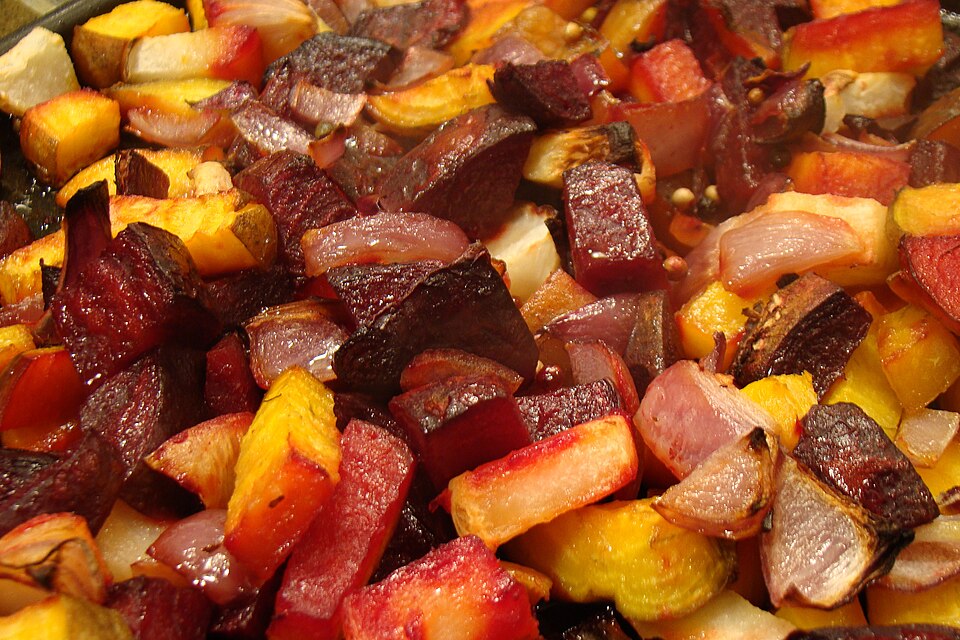
Photo: Vegan Feast Catering · CC BY 2.0 · via Wikimedia Commons · all image credits
Ingredients
- 2 pounds (900 g) small or medium beets, washed but not peeled
- 2 tablespoons olive oil
- 1 teaspoon kosher salt
- 1 cup thick Greek or whole-milk yogurt
- 1 garlic clove, grated
- 2 tablespoons chopped fresh mint, plus leaves to serve
- 1 teaspoon lemon zest
- 1 tablespoon lemon juice
- 1/2 teaspoon ground cumin
- 1 teaspoon orange zest, plus juice of half an orange
- 1/4 cup pistachios or hazelnuts, toasted and chopped
- 1 tablespoon extra-virgin olive oil, to finish
- Flaky sea salt and freshly ground black pepper
Equipment
- Foil or a lidded casserole
- Small bowl
- Microplane or zester
- Dry skillet for toasting nuts
Why this recipe works
Boiling beets leaches their colour and sugar into the water. Roasting them whole and unpeeled keeps both: the sugar concentrates, the flesh turns almost jammy, and the skins slip off with your fingers once they are cool enough to handle.
The yogurt is not a garnish but the point of the dish. Cold, tangy dairy against warm sweet beets is a pairing that shows up throughout the eastern Mediterranean, and a handful of mint makes it sing.
Heirloom varieties to look for
Detroit Dark Red is the standard, Chioggia (Candy Stripe) is the most beautiful when cut, and Golden or Burpee's Golden are sweeter and will not stain your hands. For the best flavour, grow them fast with plenty of water and harvest at 2 to 3 inches.
Method
Prepare the parcel
Heat the oven to 400 F (200 C). Trim the beet tops to 1 inch, leaving the root tail intact so the beets do not bleed. Rub them with the olive oil and kosher salt, and wrap them tightly in a double layer of foil, or use a lidded ovenproof casserole.
Roast until tender
Roast for 45 to 70 minutes, depending on size, until a skewer slides through with no resistance. Small beets will be done closer to 45 minutes; check them at that point rather than trusting the clock.
Steam and slip the skins
Open the foil carefully, avoiding the rush of steam, and let the beets cool for 15 minutes. Rub each one with a paper towel; the skins will slide off easily, taking the stem end with them.
Season the yogurt
While the beets cool, stir together the yogurt, garlic, chopped mint, lemon zest and juice, cumin, a pinch of salt and a grind of black pepper. Spread it across a shallow platter in a wide, swooping layer.
Cut and dress the beets
Cut the warm beets into thick wedges. Toss them in a bowl with the orange zest, orange juice, extra-virgin olive oil and a pinch of flaky salt, then taste for seasoning.
Assemble
Arrange the wedges over the yogurt, spoon over any juices from the bowl, and scatter with the toasted nuts and whole mint leaves. Finish with black pepper and eat at once, while the beets are still warm.
Cook's notes
- Wear gloves for red varieties or use golden beets; the pigment stains hands and cutting boards for days.
- Roast extra beets. Cooled and refrigerated, they keep for a week and are excellent sliced into salads with vinaigrette.
- The yogurt tastes best made an hour ahead, so the garlic and mint have time to infuse.
Variations
- Add 1 tablespoon of pomegranate molasses to the beet dressing and scatter with pomegranate seeds.
- Whisk 2 tablespoons of tahini into the yogurt for a richer, nuttier base.
- Serve the same components as a salad over a bed of arugula with a sherry vinaigrette.
Storage
Roasted whole beets keep refrigerated in a covered container for up to 1 week. Mint yogurt is best within 2 days; the mint darkens after that. Assemble the final dish just before serving, as the beets will bleed into the yogurt overnight.
How to serve it
Two or three wedges per serving. Serve it within the time noted above for the best texture, because heirloom produce is far less forgiving than supermarket vegetables.